
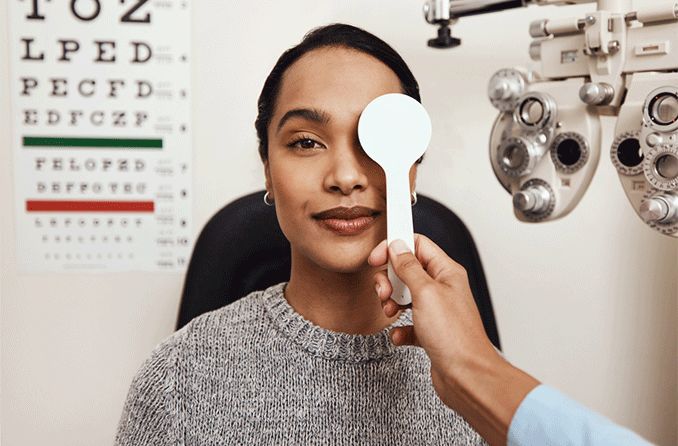
Many would agree that the world can be peek with the eyes. Some may even say eyes are the window to the heart. No matter how you perceive the eyes in your life, one thing for certain is it enables humans to see the beauty around them. You should be grateful if you are able to read this article with ease and clarity. In the world of medicine, there are diseases or conditions affecting the eye, causing a person’s eye to seem different to other normal people. In this article, we will be learning about exotropia.
Exotropia is a common form of strabismus. Strabismus is misalignments of the eyes, causing eyes to deviate inward toward the nose or outward. Exotropia specifically is the outward eye turn that is away from the nose. Exotropia may be constant or intermittent. Constant exotropia refers to the eye that turns outwards at all times. Intermittent exotropia refers to the eye turn that is only present at certain times of the day such as when a person is tired or daydreaming, or even when in stressful situations. Intermittent exotropia may also be seen when the person is looking in a distance. Intermittent exotropia is the most common form. Exotropia is commonly found in children and can be detected as early in infants.
It is not exactly known why exotropia occurs but it has been theorised that certain conditions make a person at higher risk of developing it such as baby born premature, alcohol abuse during pregnancy, uncorrected refractive errors and family history of strabismus. Family history of strabismus often be a sign for paediatric ophthalmologists to check for exotropia.
Symptoms of exotropia can be mild to severe. Mild symptoms include diplopia, a condition where a person sees two separate images of the same thing or a double vision and blurry vision. Some children with exotropia may seem to commonly close or squint one eye at times, especially when exposed to the striking sunrays. Asthenopia is also a symptom of exotropia. Asthenopia is another name for eye strain or eye fatigue. Asthenopia usually occurs after prolonged reading or when patients attempt to return the eyes to normal position. Severe exotropia can result in amblyopia. Amblyopia is a poor vision that develops from the breakdown of the brain and eye connection. Severe exotropia may also cause a person to lose their depth perception. Exotropia that is left untreated may cause permanent eye disorders.
Exotropia, similar to other eye disorders, needs to be evaluated by an ophthalmologist. Beside ophthalmologists asking questions of patients’ medical history and family, they often will run many tests to find evidence of exotropia. This includes vision test, slit-lamp exams, fundus examinations, ocular alignment test, extraocular muscle movement evaluation and cycloplegic refraction tests. These are only examples of the common tests. Do ask your healthcare provider for further information on tests done to check for exotropia.
Treatment for exotropia depends on the cause of the vision problems. For example, if it is caused by refractive error, solving this issue should improve the symptoms. Glasses, bifocal or prism lenses are among optical tools that can help alleviate symptoms. Exotropia in children that can be seen at a very young age often need amblyopia therapy. Eye patch to the stronger eye can help strengthen vision of the weaker eye in exotropia with amblyopia. Surgery may be recommended in severe exotropia and significant vision problems. Surgery is typically indicated when it cannot be controlled with other treatment options. Intermittent exotropia may benefit from injection of botulinum toxin.
It is important to treat exotropia as early as possible. When it is left untreated, it can cause great vision problems that can be permanent. Beside vision issues, it may also cause a person to frequently have headaches, eye strains, blurred vision and trouble when reading for a long time. These will accumulate to issues of the child having difficulty to learn effectively and higher risk for other conditions such as attention deficit hyperactivity disorder (ADHD) and dyslexia.
While it is true that it may be impossible to prevent exotropia, especially congenital exotropia, it is worth trying to take measures in reducing the severity and frequency of the exotropia. Getting the enough recommended hours of sleep and staying healthy as much as possible, can greatly control exotropia. Keeping vision up to date by seeing an ophthalmologist as often as needed can be a great help.
In essence, exotropia is the eye turning outward. It is part of strabismus, a condition referring to eye misalignment. Exotropia can be constant or intermittent. Symptoms are more than just the eye positioned outward as it affects vision and causes discomfort such as asthenopia. Treatment of exotropia depends on the severity of the issue. Surgery is usually done on young children or when the symptoms are severe and unable to be managed by non-surgical methods such as refractive error treatments and eye patches.
